
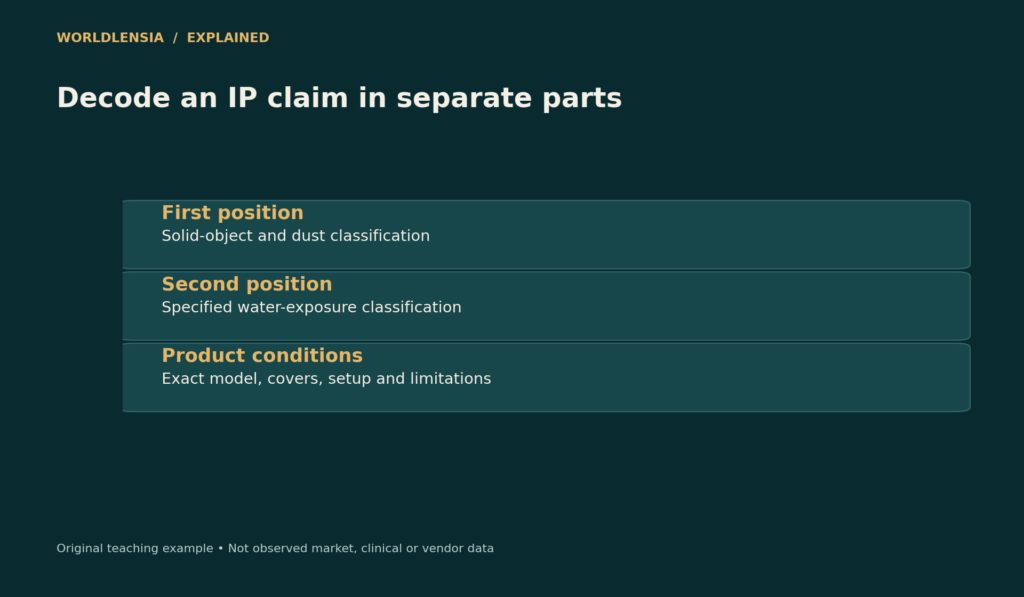
An IP rating describes tested protection provided by an enclosure under specified conditions. It is not a blanket promise that a device survives every outdoor activity, cleaning method, or accident. The letters and digits need to be read with the manufacturer's actual conditions and instructions.
IEC 60529 is the standard for enclosure protection classifications commonly called the IP Code. Its public product page identifies the scope of the standard. This guide does not reproduce the paid standard or claim that WorldLensia has certified a product.
Two positions, two questions
The first characteristic numeral concerns protection against solid foreign objects, including dust at the relevant levels. The second concerns water. An X indicates that a position is not specified in that code; it should not be silently converted into a zero or treated as proof of the highest protection.
The key reading habit is to separate the dimensions. A water claim does not establish dust performance, and a dust claim does not establish protection during immersion. A larger-looking combined number is not a complete durability score.
| Label element | Question to ask |
|---|---|
| First numeral | What solid-object or dust protection is specified? |
| Second numeral | What water exposure was evaluated? |
| Manufacturer conditions | Under what setup and limitations? |
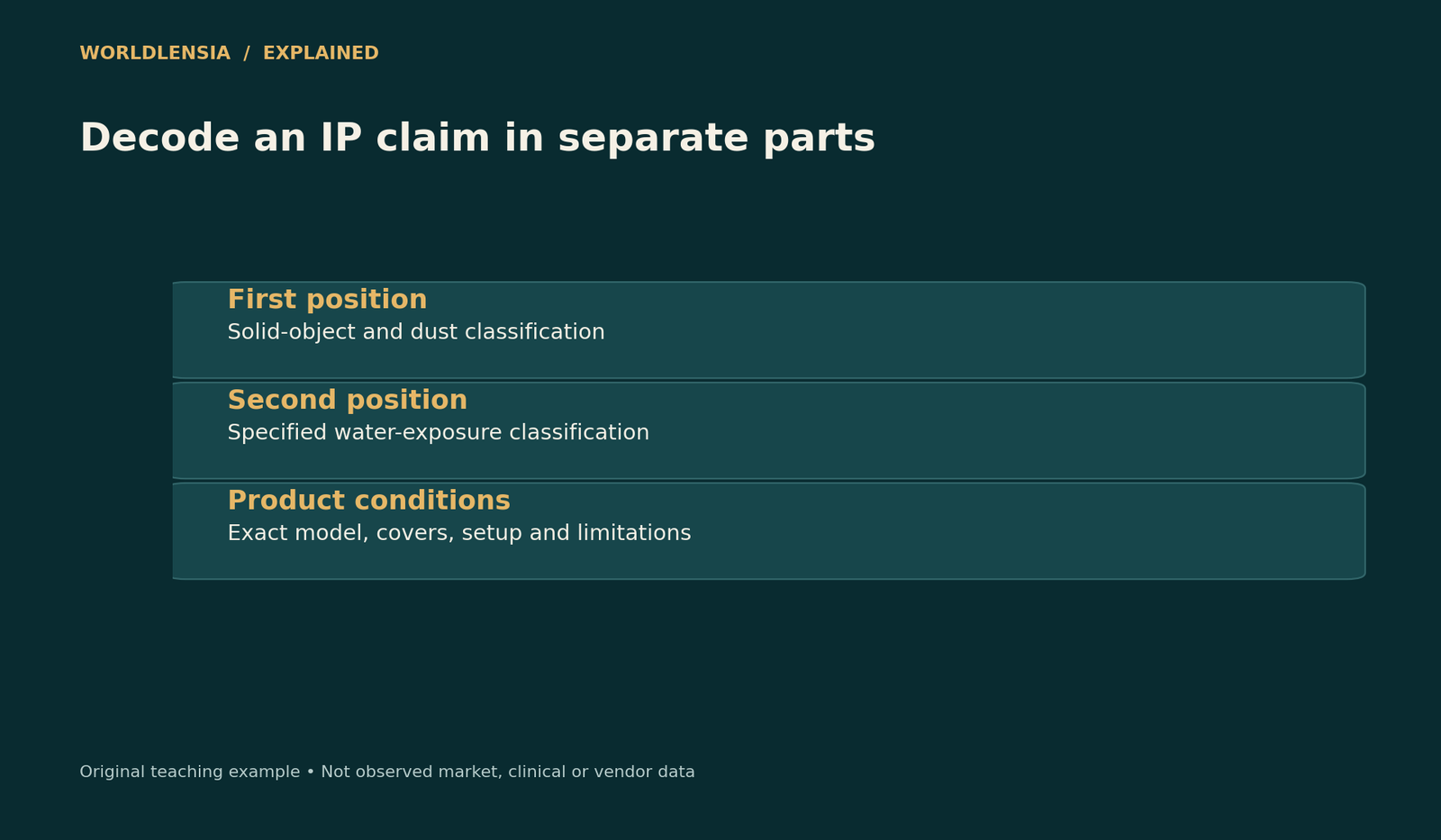
The explanatory image decodes the positions; it is not a test certificate. The exact product documentation remains necessary.
Immersion and jets are different exposures
Protection against immersion should not be assumed to cover every form of pressurized spray. A product may list more than one applicable rating. Check the stated codes and test conditions rather than interpreting the water numeral as a simple all-purpose ladder.
Similarly, depth and duration claims for an immersion-rated product belong together. A vague phrase such as “water resistant” does not tell the reader whether a particular activity is covered. Use the model-specific instructions.
Real conditions can differ from testing
Water temperature, chemicals, salt, movement, pressure, wear, and physical damage can affect exposure. A controlled test claim does not automatically cover hot showers, detergents, seawater, or a damaged seal.
Do not conduct an improvised immersion experiment to verify a purchase. It can damage the device and does not reproduce a standardized test. A buyer should inspect the supplied documentation and any authorized test information instead.
Ports and covers can matter
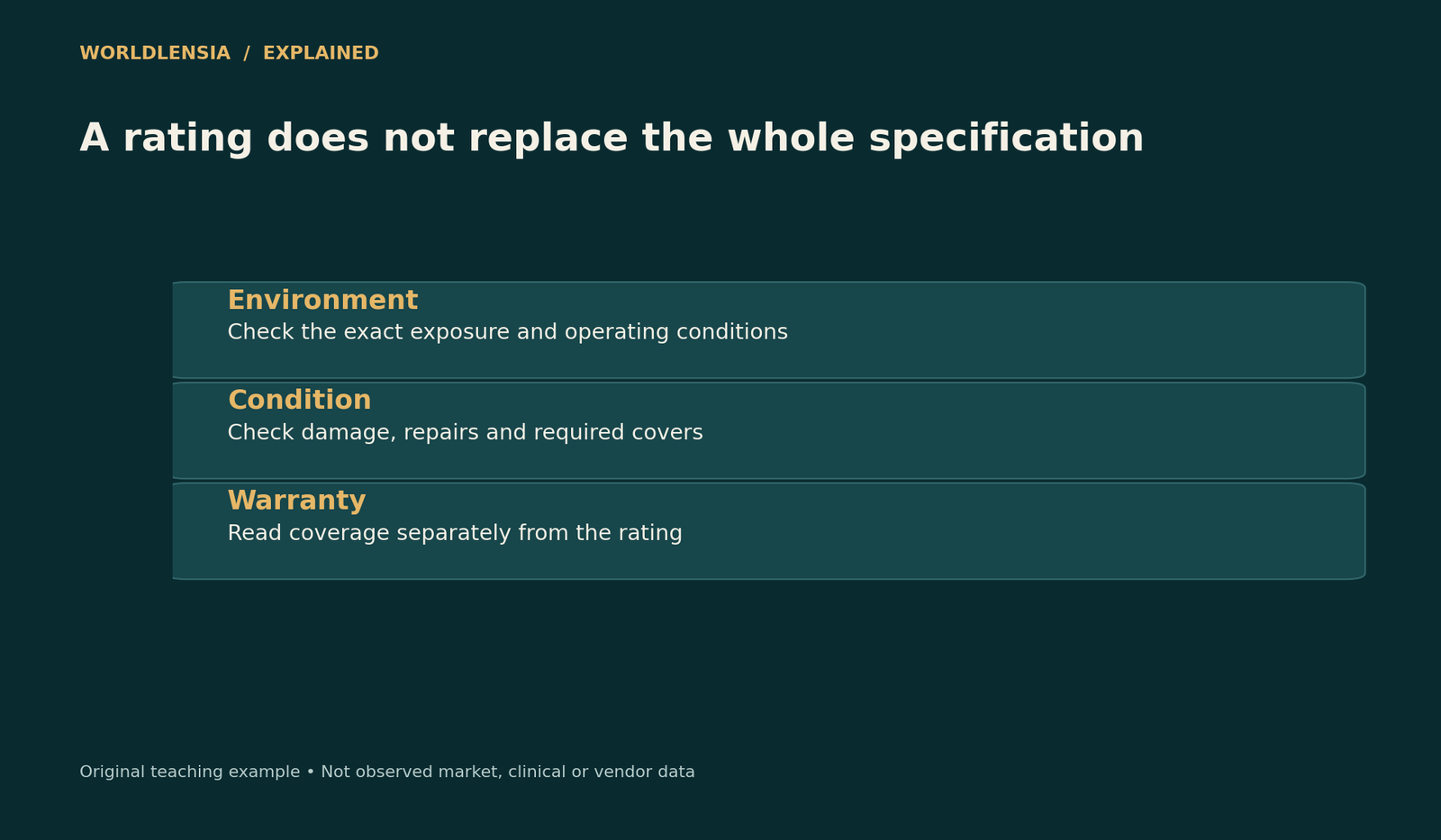
Some equipment's protection conditions depend on covers being closed, approved accessories being attached, or other setup requirements. A claim for one configuration may not apply when a connector is open.
Record the exact model and revision. Similar product names do not establish identical protection, and a case or accessory may have its own conditions. A review should not transfer a rating from one version to another without evidence.
Protection and warranty are separate
An enclosure rating is not the same document as a warranty. Read what the warranty covers and excludes and follow the manufacturer's handling instructions. Do not promise that every exposure within a headline rating will receive free repair.
Also separate water and dust resistance from drop resistance, scratch resistance, chemical compatibility, and electrical safety. Those questions may require different tests and certifications. One code cannot serve as evidence for all of them.
Compare devices by the intended exposure
Write down the use case: rain during delivery work, dusty storage, occasional splashes, or another defined environment. Then compare the relevant protection claim and operating instructions. If the activity is not covered clearly, ask the manufacturer rather than extrapolating.
A more expensive device with a higher-sounding rating may not address the main risk in your environment. A product suitable for one kind of water exposure can still be inappropriate for chemicals or heat. The comparison must connect the claim to the actual conditions.
What a good specification summary includes
State the exact code, model, configuration, source, and stated conditions. Avoid changing “resistant under specified conditions” into “waterproof everywhere.” If independent testing was not reviewed, do not imply that it was.
WorldLensia's refurbished-electronics checklist provides a related caution: physical condition and documentation matter alongside the original specification. An enclosure that has been repaired or damaged deserves particular attention to the manufacturer's service guidance.
Document the source of the claim
A manufacturer specification, retailer listing, and independent test report are different evidence types. Retain the original specification where possible and identify any disagreement. If a retailer uses a broader word than the manufacturer, do not adopt the broader claim without support. A buyer-facing summary should make the exact model and conditions easy to find. This is particularly important when a product family contains several versions or when an accessory changes the enclosure configuration. Clear attribution helps readers distinguish the specified protection from an unsupported marketing interpretation.
Sources and methodology
IEC's public IEC 60529 product page and manufacturer IP explanations were checked October 18, 2026. This is a specification-reading guide, not a laboratory test, certification, or warranty interpretation for any named device.
- IEC: IEC 60529 public standard record — checked October 18, 2026.
- Zebra: Manufacturer IP explanation — checked October 18, 2026.
Continue with Check refurbished-device condition and Interpret USB-C specifications for related context.
To keep enclosure protection separate from accessory and seller claims, see USB-C Cables: Check Charging, Data and Display Separately and Refurbished Electronics: A Checklist Beyond the Discount.